

Accidents are bound to happen on any job, but the construction sector in Canada has an increased liability for entrepreneurs. From job-site hazards to high-valued equipment theft, contractors and construction businesses overindex for cost-intensive risks. Contractors, construction companies, and skilled trades professionals all over Canada face increasing risks in 2026, from increasing costs of material and supply chain delays to extreme weather patterns and stricter contract requirements. Having the proper contractor insurance in place is not simply protection; it’s a key element to protecting your business, locking in jobs and managing client expectations.
The construction profession is an intricate art of pulling many different pieces together, and insurance is the cornerstone of that structure. Managing several job sites, utilizing several subcontractors, or working as a self-employed tradesperson without being adequately insured leaves you vulnerable to costly liability claims, property loss, work delays, and expenses out of pocket for legal defense.
There is a complexity in managing crews, project schedules, and budgets, not to mention maintaining compliance, and having the correct insurance package can act as the ultimate safeguard for projects, cash, and business reputation. We explore the must-have policies that Canadian general contractors, subcontractors, and skilled trades professionals should invest in during 2026 below.
Why Is Insurance Important to independent contractors in Canada?
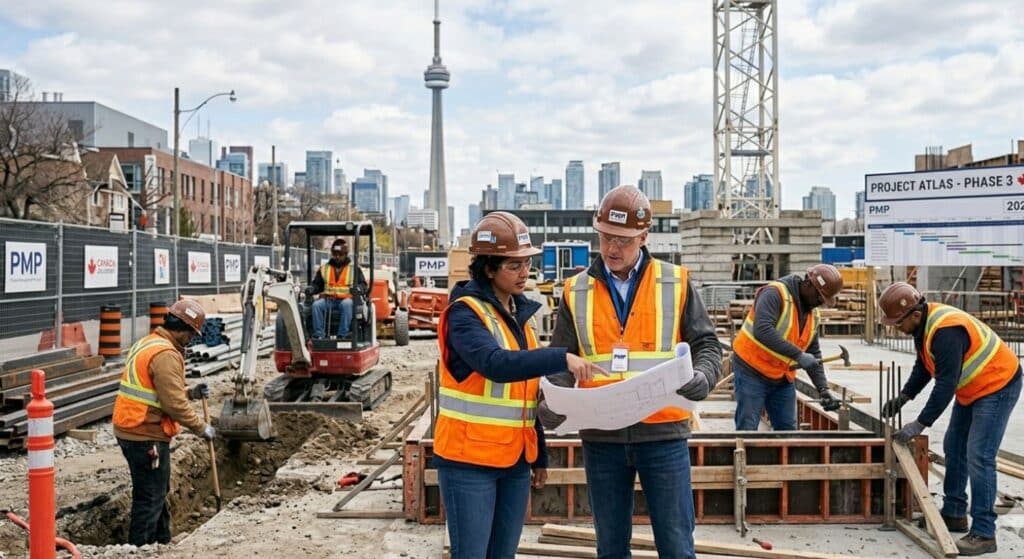
Whether it is electrical contracting, construction, framing, painting, interior design, roofing, plumbing, and several renovations, a contractor will need to get liability insurance upon starting their venture, even if it’s as a general contractor. Accidents happen, and an unexpected liability risk or a property damage claim could not only cost the job, but it may have much greater implications for the company. A contractor insurance package is designed to cover most needs when it comes to guarding against financial loss. Independent contractors and construction businesses should look for insurance in order to keep themselves, their employees, and clients safe. Furthermore, contractor insurance can make a contractor appear more professional, trustworthy, and reliable, helping secure more jobs.
What Is general liability insurance for independent contractors?
An independent contractor should take out a general liability insurance policy so that they are covered against claims of bodily injury or property damage made by a third-party. An independent contractor can use this general liability insurance to cover claims of property damage or bodily injury that may be caused as a result of work carried out by the contractor; It will provide cover for third-party claims for bodily injury, property damage, and advertising injury as well as liability defense costs.

Choosing the correct liability insurance for contractors
Liability insurance is the way in which a contractor can take control of any risk to their business, and most insurance providers offer several choices for varied levels of coverage. The contractor should investigate any risks associated with the nature of their work and the price of small business insurance to find the right package for them. It is important to remember that risks may differ depending on how great or small they may be; the risks vary depending on the trade that is operated, the location of the work being undertaken, and the size of the business, and the service-related risks should also be assessed.
Generally speaking, the greatest levels of insurance will cover a vast range of issues; however, each individual policy should be assessed. Essential insurance policies for general contractors and construction professionals. The right contractor or construction insurance package should take into account the type of work carried out by the contractor, as well as what services are being provided and the level of risk for each individual project.
Essential Insurance Policies for Canadian Contractors in 2026
The types of liability insurance for contractors and construction professionals available are as follows:
General liability insurance for contractors
Should a customer or passer-by be injured at your work site, or should damage occur to the personal property of a third-party during the course of your work, general liability insurance is what will compensate them. This type of insurance protects against claims from third parties for bodily injury or property damage, which is a direct consequence of the contractor’s business activities or the contractor’s business property. If the injured party wishes to sue the contractor, general liability insurance will cover the expenses of defending the lawsuit as well as any settlements or court awards.
Who needs this: General contractors, subcontractors, welders, and skilled trades professionals.
Commercial general liability insurance
Whether you are self-employed as a graphic designer, tradesperson, consultant, or even a delivery person, commercial general liability insurance, or CGL could protect you against third-party liability claims for personal injury or property damage. For example, it is not uncommon for an accidental trip to cause an injury or for an accidental reversal to damage an individual’s property; CGL can cover medical costs and potential legal fees, as well as settlement costs.
This policy also provides protection against copyright infringement claims and libel or slander. This coverage is a must; Commercial general liability covers all third-party claims of bodily injury, property damage, and personal injury such as libel or slander as a direct result of the independent contractor’s business operations; for example, if a client trips on the business’s premises or damages property by accidentally backing up, CGL will respond.
Professional liability insurance or Errors and omissions (E&O) insurance
Also known as E&O, professional liability insurance is what will protect you against claims related to:
- Mistakes professionally
- Negligence in your work
- Misrepresentation
- Failure to deliver services professionally as promised
This coverage is essential if you are a design-build contractor or consultant; it can also cover risks associated with the advice or plans that a contractor provides. An independent consultant, for example, could have a client sue them on the basis that their advice cost the client money; professional liability insurance covers the potential lawsuit.
If a fee is required for services or designs, professional liability insurance or E&O insurance will provide cover against claims from third-parties for financial losses incurred as a direct result of their business. It should not be mistaken for CGL as general liability insurance covers injury or damage to property, whereas professional liability provides cover against financial damages.
Who needs this: Design-build contractors, consultants, project managers, and contractors providing advice, plans, or specifications.
Wrap-up liability insurance for large construction projects
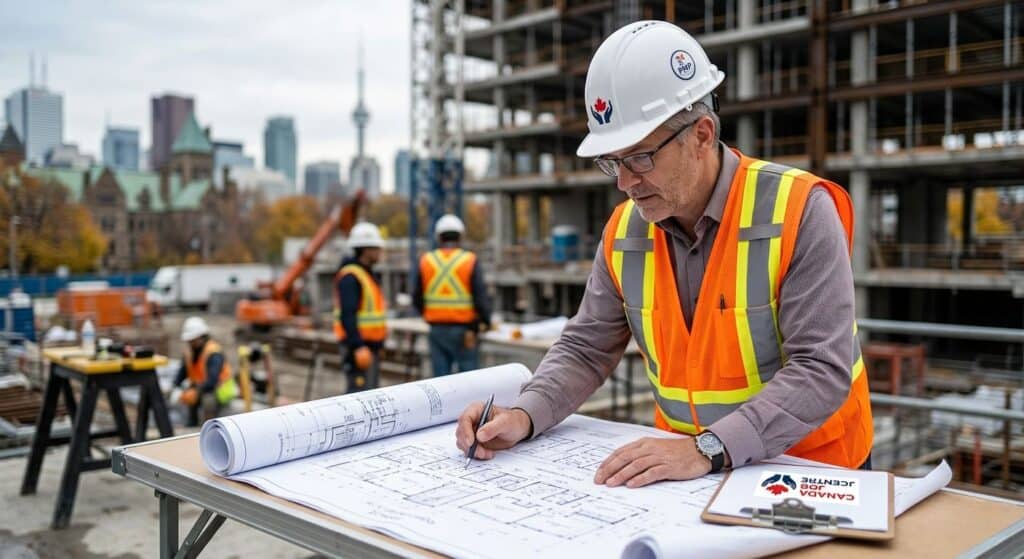
Any large-scale construction projects will require wrap-up liability insurance coverage. This all-in-one policy covers a range of risks and provides cover to all relevant parties, from the contractors to the owners, engineers, architects, and subcontractors involved in a particular build. This policy covers general and third-party liability claims and eliminates any risk of overlap or deficiency in insurance cover from individual policies.
Who needs this: General contractors managing large-scale builds, developers, owners, and contractors working on complex or multi-phase construction projects.
Pollution liability insurance for construction and environmental risks
Contractors can gain protection against environmental liability from pollution caused by the nature of their work through pollution liability coverage. It provides coverage against third-party claims of personal injury or property damage, as well as environmental damage and impairment. If the contractors are exposed to pollutants during a project or after it is finished and a lawsuit is filed, this type of coverage will also provide payment for any legal fees or clean-up costs associated with the situation; this covers damage that is a direct result of the pollutants originating from the work site.
Who needs this: Contractors involved in excavation, demolition, remediation, fuel handling, or projects where environmental exposure is a risk.
Tools and Equipment Insurance
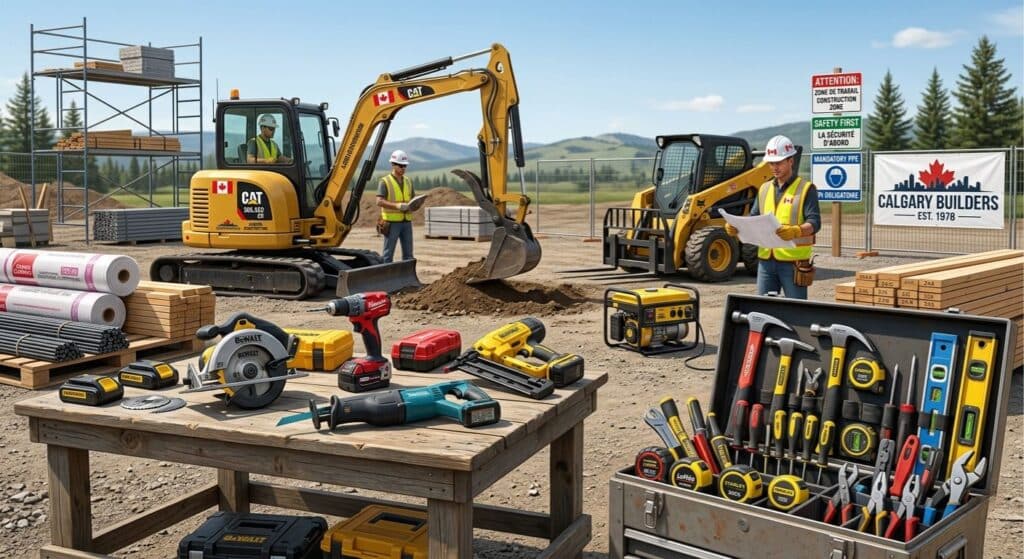
Tool and equipment theft is one of the most common insurance claims made by Canadian contractors—particularly those in urban construction settings and overnight work sites. Without coverage, lost or stolen tools can delay projects and severely damage cash flow. Tool and equipment insurance protects contractors’ portable tools or equipment from loss due to theft, vandalism, fire, or water damage. The following are some precautions and actions contractors and skilled trades can take regarding tools and equipment loss.
Who needs this: Skilled trades professionals, independent contractors, and construction companies that depend on owned or rented tools and equipment.
Builder’s Risk (Course of Construction) Insurance
Also called course of construction insurance, a builder’s risk policy is a type of property insurance taken out to cover the period of time when a contractor or property owner will need coverage from the time of project commencement to completion. It can cover buildings, structures, and materials when they are undergoing renovation or construction. Such an insurance policy will cover any loss or damage caused to a building by a covered peril such as fire, theft, or vandalism. The risk of overland flood and sewer backup can be covered at an additional cost.
Who needs this: General contractors, property owners, and developers undertaking new builds; renovations; or large renovations of structural components of existing buildings.
Installation Floater Insurance for Materials and Equipment
You may think it unnecessary to insure the materials and equipment you bring to your next job, but not doing so could be costly. An installation floater provides coverage for a contractor’s materials or equipment at the temporary job site, during transport, or while in storage until it is installed. For instance, say an HVAC contractor leaves a new air conditioning unit at the site over night, intending to install it the next day. It’s stolen or vandalized before it can be installed, and the contractor bears the cost of repairing or replacing the unit. An installation floater, however, could cover such costs.
Who needs this: HVAC contractors, electricians, plumbers, and any other trades professional who installs high-value equipment or materials.
Commercial Auto Insurance
Contractors or construction professionals should ensure all vehicles or trailers used for commercial purposes in the transport of people, packaged goods, raw materials, or hauling equipment are covered by commercial auto insurance. As part of your commercial auto coverage, and depending on the value of your vehicle, you may want to ensure optional collision/uninsured motorist coverage, uninsured motorists coverage, and comprehensive insurance are added to the policy. Collision/upset insurance covers damages to your vehicle following a collision with another vehicle, fixed object (e.g., light post), or vehicle rollovers during a crash. Comprehensive insurance covers damage from such occurrences as theft, vandalism, natural disasters, severe weather events, airborne debris such as from roof damage or wind, or even animal strikes on the road if an animal darts out in front of you unexpectedly.
Who needs this: Contractors that use vans, trucks, trailers, or fleets for transporting people or materials or hauling equipment or services related to their contracting business.
Commercial Property Insurance for Contractor Offices and Yards
Although your primary focus may be on various job sites across the region, your contracting business’s physical office and storage facilities also need protection. Commercial property insurance covers damages to your business property (building, if you own it), contents, inventory, and anything else you own on your property such as signage, by perils such as natural disasters, fire, theft, or vandalism. If you rent a space to house your business operations, your landlord’s insurance would cover the building structure, but your contents or contents insurance would cover everything else.
Who needs this: Contracting companies with physical offices, shops, storage units, or owned commercial property.
Drone Liability Insurance for Construction Job Sites
In today’s market, it’s becoming increasingly common for many construction professionals to use drones at job sites. Drones are of course a great asset to any project, but they do present liability risks. Drone liability insurance covers claims such as violation of privacy rights and third-party bodily injury or property damage. It also can offer device protection for lost, stolen, damaged, or vandalized equipment.
Who needs this: Contractors who use drones for job site surveys, inspections, project progress monitoring, and the like.
Umbrella Liability Insurance for Contractors
Commercial umbrella insurance extends your existing liability limits. It is an additional layer of protection on top of your other insurance, covering you when a claim exceeds the limit of your base liability insurance policy. It can also serve to widen the coverage provided by your original policy.
Contents insurance
Contents insurance is the type of coverage that would pay to replace or repair any lost or damaged tools, equipment, or inventory necessary for the completion of the job. Tools and equipment, arguably some of the most expensive assets a contractor owns, could be a very significant loss, and without them, the contractor cannot continue to provide products and services to customers.
Real-world scenario: A general contractor has $10,000 worth of equipment stored at the office location. Someone broke into the office and stole all of the contractor’s equipment while vandalizing the office’s door. Content insurance would pay to replace or repair the stolen tools and equipment, as well as potential property damage at the office resulting from the break-in.
Cyber liability insurance
In 2026, nearly every business has a digital presence, so it’s important to have coverage to protect technology systems and customers’ data. Cyber liability insurance can protect against the threats from cybersecurity issues such as cyberattacks and associated issues of hackers such as data breaches or Website takeovers. Protection of your own and your customers’ data is paramount in 2026 as the number of cyberattacks on small and medium-sized businesses in
Canada is on the rise. If your business collects customer information, processes transactions, or relies on systems that use a computer network, then this type of insurance could pay for your business notification, data recovery, business interruption if a cyber event stops the company from working, and liability for the customers whose sensitive data was breached.
Real-world scenario: A contractor received an email from someone they often worked with, which turned out to be a phishing scam. It resulted in a compromise of sensitive customer data in the contractor’s system. Cyber liability insurance could help cover costs of forensic investigation into the cyber event and defenses against lawsuits from individuals whose information has been compromised.
Workers’ compensation insurance is a government-operated insurance scheme that covers an employee’s lost wages, medical expenses, and rehabilitation. While every employee working for you is automatically covered under their employer’s worker’s compensation policy, every independent contractor is not. If you’re an independent contractor working in a higher-risk field like construction or manual labor, purchasing an individual policy can protect you against workplace injuries. Some clients or general contractors may even require you to be covered under an individual policy to take on the contract.
Business Interruption Insurance
Usually provided alongside property insurance, business interruption coverage can pay for the lost income your business will incur as well as your ongoing expenses (payroll, rent, and mortgage) when a covered event forces you to temporarily shut down your business. With it, just a few weeks of closure due to fire or flood could completely wipe out months of profit.
Directors and Officers Insurance (D&O)
If your company is incorporated, your directors and officers can be held personally liable for their actions that may negatively affect shareholders, employees, or third parties. D&O insurance protects the personal assets of your directors and officers. This coverage becomes a bigger factor once you have secured investors or are sitting on any corporate board.
Key Person Insurance
If your business depends heavily on one or two people—a founder, a lead salesperson, or a technical expert—key person insurance provides a cash payout if that person dies or becomes disabled. The business uses the payout to cover lost revenue, recruitment costs, or debt obligations during the transition.
Health and Benefits Insurance
Canada’s universal healthcare doesn’t cover prescriptions, dental, vision, physiotherapy, or mental health counseling. Group health benefits plans for small businesses typically cost $80 to $350 per employee per month. Self-employed Canadians have specific options, including Health Spending Accounts (HSAs) and private health plans.
Why is it important to check that an independent contractor has insurance coverage?
Before bringing on an independent contractor, it’s crucial to confirm they have their own commercial general or contractor liability insurance policy, at a minimum, to protect your business from any bodily injury or property damage claims they may cause. However, depending on what type of work you’ve hired them to do, you may want to ensure they have professional liability insurance, too.
Bodily injury liability
Let’s say your contractor is working on your property, and a client or passerby trips over their tools and gets seriously hurt. If that person sues, your business could be dragged into the liability claim. If the contractor has proper liability insurance, their policy can handle those legal and medical costs instead of yours.
Property damage
Now imagine the contractor accidentally breaks a window, floods an office, or damages expensive equipment while working. Without insurance, those repair or replacement costs could fall on your business, meaning you’ll have to file a claim and risk an increase in your insurance premiums.
Mistakes or omissions
If a contractor you’ve hired gives incorrect advice or makes a serious mistake that leads to financial loss, your business might get blamed, too. For example, a freelance web developer accidentally deletes customer data while migrating your site. If a client sues over lost revenue, their professional liability coverage can help cover those damages instead of it falling on your business.
Plus, remember, your business insurance won’t automatically cover a contractor’s mistakes or accidents unless you’ve added them as an additional insured on your policy. However, adding them as an additional insured may also increase your insurance premiums. That’s why many business owners will require their independent contractors to carry their own insurance policy before working with them.
How to protect yourself as a business owner when hiring an independent contractor
When hiring an independent contractor, it’s essential to do your due diligence to protect your business from potential risks.
Before signing a contract, ask the potential contractor for the following:
- License numbers, if applicable (i.e., trades)
- A written proposal that outlines
- What work they’ll be doing
- The total cost
- Project timelines
- References from past clients
- Proof of insurance coverage
Protip: Call their insurance company to ensure that their policy is active and will stay active while they’re working with you.
How Much Does Insurance for Independent Contractors Cost in Canada?
The cost of contractor insurance can start from $450 annually for a basic policy with a $2 million limit for small or medium-sized businesses. Factors that influence the cost of insurance for independent contractors include the type of work, location, and the contractor’s experience.
In many regions, including Canada, independent contractor insurance premiums are fully tax-deductible as a business expense.
How to Get an Insurance Quote as an Independent Contractor
The process of obtaining insurance for independent contractors can be simplified by completing an online application for a quote. Insurance companies may require independent contractors to answer questions about their business to provide tailored policy options. Working with an experienced insurance company ensures you receive coverage that matches your risks and meets client insurance requirements.
Conclusion
If you regularly work with independent contractors, it’s essential to ensure they have insurance coverage. For additional protection, you may also want to add an endorsement to cover their actions while working on your behalf. With the proper business insurance coverage, you can have the peace of mind to focus on completing projects and growing your business—not worrying about worst-case scenarios.