

Canada enters 2026. The demand for laborers is at an all time high. Canada needs laborers now. The government and farm owners in the agricultural industry have opened more chances for international workers. International workers can fill the sector’s labor shortages. The sector needs workers today. Such Farm Worker Jobs in Canada 2026 will provide an unparalleled opportunity for people from all over the world to work in an agricultural setting, with the added benefit of visa sponsorship through the Temporary Foreign Worker Program (TFWP) and the Seasonal Agricultural Worker Program (SAWP).
Whether you are an expert harvester or an entry-level general laborer, these occupations provide decent pay, free housing, and a potential path to permanent residency.This guide can be used to apply for farm labor jobs that have been approved through the Labour Market Impact Assessment (LMIA) procedure in 2026. It is specifically for folks from different nations. These positions are available across Canada through the Agriculture Worker Program’s Agriculture Stream.
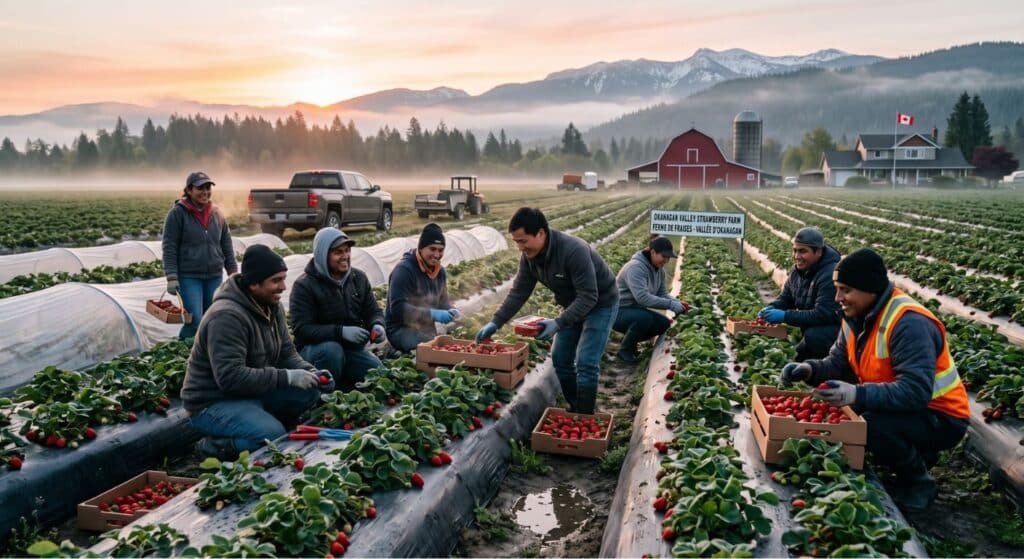
Role of LMIA Work Permits in 2026
Canada has two foreign worker programs. The Seasonal Agricultural Worker Program (SAWP) is for workers from the Caribbean and Mexico. The Agricultural Stream of the Temporary Foreign Worker Program (TFWP) is for workers, from any country. The Seasonal Agricultural Worker Program and the Agricultural Stream of the Temporary Foreign Worker Program require firms to submit Labour Market Impact Assessments (LMIAs) that show the firms cannot fill the jobs with workers. A Labour Market Impact Assessment is a document that Canadian firms must obtain before Canadian firms recruit workers. A foreign worker cannot work lawfully in Canada unless he or she has an LMIA.
Why is Canada hiring foreign farm labourers in 2026?
Canada’s agriculture industry is critical to the economy, yet rural areas frequently struggle to locate enough local labor. To help bridge this gap, the government allows farmers to sponsor overseas workers through programs such as the Temporary Foreign Worker Program (TFWP) and the Agri-Food Immigration Pilot.
LMIA Approved Farm Jobs in Canada
Livestock Workers
Animal care roles include feeding, cleaning, and milking. Livestock farming is notably popular in Saskatchewan and Manitoba, where big cow and dairy farms abound.
General Farm Workers
These laborers perform a variety of jobs, including crop planting and harvesting as well as agricultural equipment maintenance. The provinces with the biggest demand for general farm workers are Ontario, British Columbia, and Alberta.
Fruit and Vegetable Pickers
Seasonal occupations picking fruits and vegetables are widespread in British Columbia and Quebec. These responsibilities include harvesting crops, sorting produce, and preparing them for shipping.
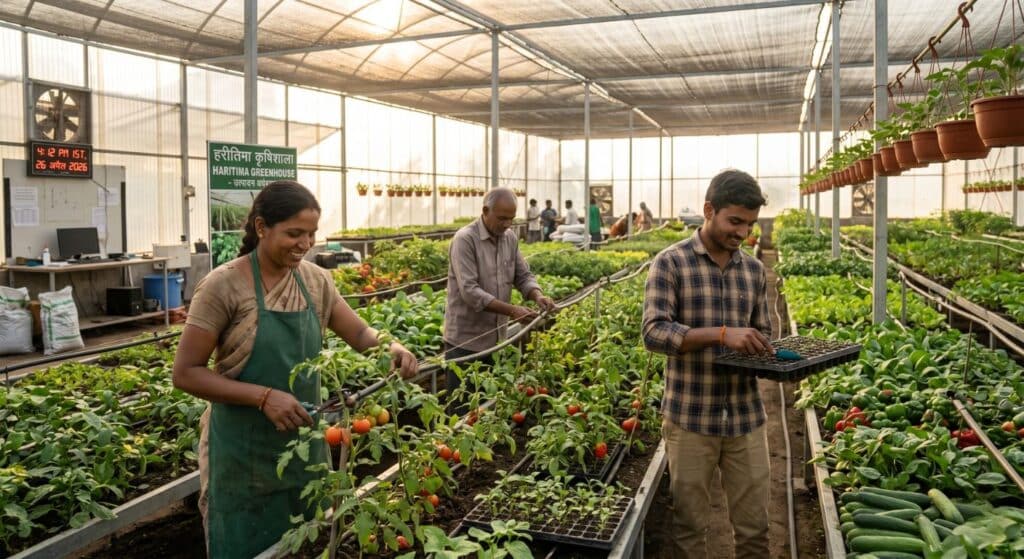
Greenhouse Workers
In Canada’s chilly environment, greenhouses are essential for cultivating a wide range of plants. Workers care for plants, check greenhouse conditions, and help with planting and harvesting. There are many greenhouses in Ontario and Quebec that employ foreign workers.
Farm Supervisors and Specialized Roles
Experienced workers may find chances in supervisory or specialized roles, such as running advanced machinery or managing irrigation systems.
How to Find LMIA-Approved Farm Worker Jobs in Canada
Indeed, Career Bank and the AgriHR Toolkit are excellent resources for finding agricultural career opportunities for overseas personnel. These websites usually feature positions that have received LMIA approval.
For anyone looking for a position with LMIA approval, the Canadian government’s Job Bank is a great place to start. The website allows users to narrow down job advertisements to only those that support visa sponsorship.
Certain companies concentrate on recruiting international workers for agricultural positions in Canada. While you apply, these firms can provide further guidance and resources. Conducting research and contacting farms directly can be effective. Many large farms that regularly hire foreign workers may not publicize all open vacancies online.
Qualifications for Foreign Workers
To be eligible for farm jobs that have received LMIA approval, foreign workers must fulfill these requirements:
Experience & Qualifications: Although formal education is not always a must for many roles on a farm, having worked in farming or agriculture before can be a plus. There might be some specialized jobs that need you to have certain skills or certificates.
Language Proficiency: Normally, you will need to be able to speak either French or English well, most importantly for jobs where you have to talk to bosses or coworkers.
Health and Fitness: It is important to be in good health and shape, because farm work can take a lot of physical effort. It is also possible that some jobs will ask you to have a checkup with a doctor.
Most farm jobs that get LMIA approval are part of the Temporary Foreign Worker Program (TFWP), which lets companies hire workers from other countries for a limited time. It’s really important for those applying to get to know the TFWP well.
Workers in Livestock
What reasons explain Canada’s need for employing foreign farm laborers in 2026?
Agriculture is a vital part of Canada’s financial system, but it is often hard to find enough local people to work on farms in the countryside. The government has programs like the Agri-Food Immigration Pilot and the Temporary Foreign Worker Program (TFWP) that allow farmers to bring in workers from other countries to make up for this shortage.
The rise in hiring in 2026 will be caused by these reasons:
- The growth of commercial farms in the provinces of Saskatchewan, Manitoba, Alberta, and Ontario.
- A bigger requirement for seasonal crop collectors and animal carers employed throughout the year.
- Due to a rural workforce that is getting older, there are farm jobs becoming open.
- There is an increasing demand from other countries for farm goods made in Canada.
- New rules are encouraging the sponsorship of visas for farmhands that are much needed.
- Consequently, the year 2026 is a safe and legitimate moment to send an application for farm jobs that can be found in Canada.
The duties of farmhands are described here
- You will be involved in crop cultivation and taking care of animals on farms of all sizes as a farmhand dealing with agriculture and livestock.
- Common jobs involve planting new crops, giving them water, and gathering what they produce, such as produce, greens, or seed crops.
- Looking after farm animals such as cattle, fowl, and ovine creatures entails providing nourishment, tidying up after them, and general upkeep.
- Operating fundamental agricultural instruments is part of the job (instruction will be given).
- Keeping barns, animal enclosures, and storage spaces in a tidy state.
- Arranging and boxing harvested items in preparation to be sold or moved.
- Keeping fences, machinery, and water delivery structures in good repair.
This job requires hands-on work outdoors, so it’s great for people who like working together and being active.
Salary In Canada, every agricultural worker, including those from other countries, has the right to safe work conditions and fair payment.
From $16 to $22 CAD per hour is the pay rate.
Each work week is between 40 and 48 hours.
Extra hours worked are paid according to the rules set by local authorities.
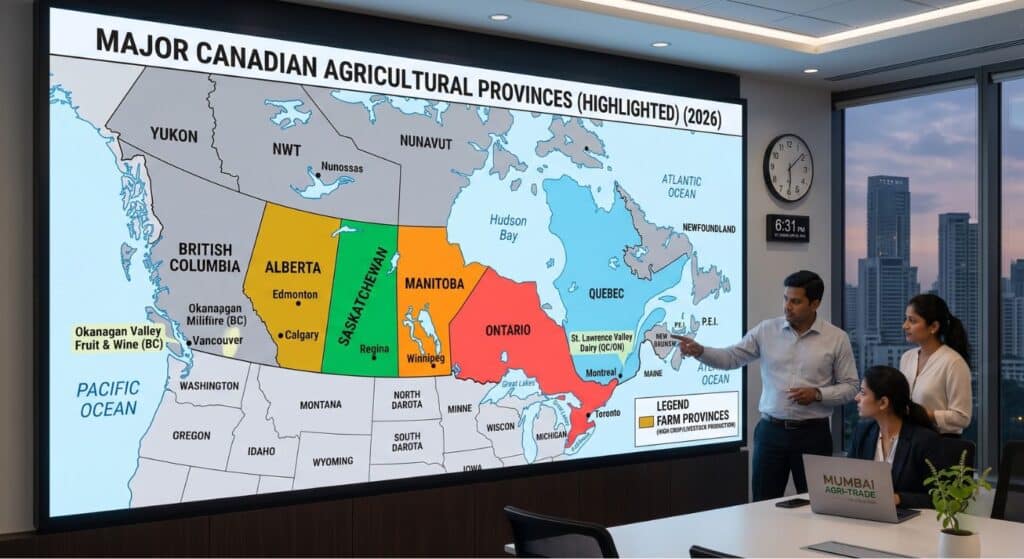
Hiring by Provinces in 2026
- Many provinces are looking for workers from abroad, especially those with large farming areas that grow fruits and vegetables, or raise cows, chickens, and crops.
- Businesses in Alberta that produce grains and beef need staff all year.
- In Saskatchewan, some farms focus on raising animals, while others grow wheat and barley.
- Manitoba has jobs in greenhouses, crop gathering, and on farms with pigs and chickens.
- In British Columbia, there are many different kinds of animal farms, as well as vineyards and fruit orchards.
These provinces frequently assist workers coming from abroad by connecting them with reliable employers.
Fruit Picking Jobs
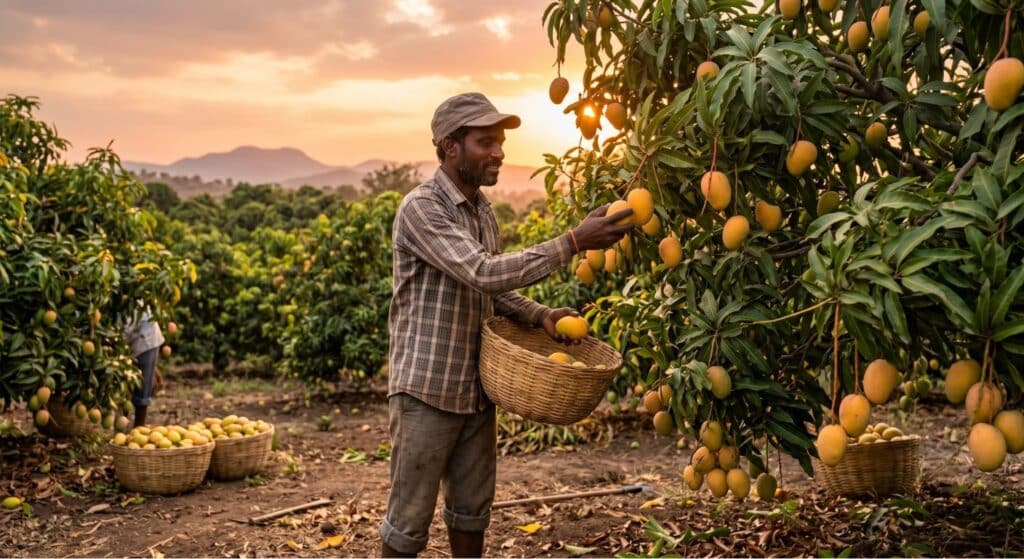
Why Fruit Farm Employment in Canada Is Ideal for Foreign Workers in 2026
Workforce shortages are still a problem for Canada’s fruit industry. Employers use the Temporary Foreign Worker Program (TFWP), the Seasonal Agricultural Worker Program (SAWP), and the new agriculture-specific permanent residency stream starting in 2025–2026. By remaining LMIA-exempt and not requiring applicants to take the IELTS, SAWP speeds up job approvals. These positions provide chances for long-term success, competitive pay, and affordable rural living. Increased hiring from significant fruit-growing regions is anticipated in 2026, with over 15,000 agricultural jobs anticipated by 2028.
The Daily Tasks of a Canadian Fruit Farmworker
Pruning trees, planting seedlings, and applying organic fertilizers are examples of tasks that prioritize hands-on, seasonal work suited to fruit cycles.
Harvesting crops including apples, cherries, berries, and grapes with quality in mind, checking the product for ripeness, sorting, and packing it into boxes.
Using light equipment, such as small tractors, ladders, or irrigation tools (training provided)
maintaining fences, controlling insects, and weeding orchards.
Helping with greenhouse operations or cold storage at off-peak times
During the harvest season (June to October), expect to work 8–10 hour shifts starting at daybreak and on weekends. Greenhouses offer year-round choices for upkeep and pruning.
Premier Fruit Farms Hires Foreign Talent in 2026
Employers that actively sponsor through TFWP/SAWP include Jealous Fruits Ltd. (Kelowna, BC), which offers cherries with housing included.
Okanagan Sunshine Fruit Packer Ltd. (BC) – Packaging and grading; LMIA focus
Gwillimdale Farms (Ontario) provides training for tender fruits, whereas Scotian Gold (Nova Scotia) offers seasonal contracts for apples.
Sandher Fruit Packers (Okanagan, BC) – Berries; returning worker priority
Vineland Growers (Ontario) – Peaches and apples; greenhouse choices.
First Pick Fruit and Produce Ltd. (Various): Multi-crop harvesting.
Agencies like F.A.R.M.S. (Ontario) and WALI (BC) connect workers with these farms.
Benefits for Farm Workers
- Competitive Hourly Wage: Farm workers can start making between $16.00 and $22.00 an hour, which is a stable income with the chance to make more with experience.
- Staff Housing: Many companies offer staff housing, which helps keep housing costs low and makes life easier for workers who live on or near the farm.
- Moving Help: Employers often pay for farm workers’ moving costs, such as the cost of getting to and from work in Canada or between farms.
- Opportunities for Training: Some companies offer training programs to help farm workers learn new skills, become more efficient, and move up in their careers in agriculture.
- No College Required: People who want to work on farms can apply with just a high school diploma or equivalent, so these jobs are open to people who don’t have advanced degrees or other official qualifications.
- Open to Candidates with Work Permits: Applicants for farm worker jobs can be from anyone with or without a valid Canadian work permit. These jobs can be temporary or permanent in Canada’s agricultural industry
Companies Offering Agriculture Jobs with Visa Sponsorship
P&H Farming Company Jobs
Application Process:
Visit the P&H Careers Page
Select “Yes” for Visa Sponsorship while applying
Aramark Food Jobs in Canada
Industry: Food, customer service, and uniform supply
Eligibility: Open to international applicants
Application Process: Visit the Aramark website for job listings
How to Apply for Agriculture Jobs in Canada With Visa Sponsorship
- Visit online job portals such as the Government of Canada job site, LinkedIn, and company career pages.
- Search for positions that mention visa sponsorship.
- Submit an online application with your resume and required documents.
- If shortlisted, attend an interview and provide original documents.
Conclusion
We have seen that LMIA-approved farm jobs in Canada give workers a chance to work and live in a country with a farming sector. We have watched many foreign workers take LMIA-approved farm jobs. Getting an LMIA-approved farm job can be hard. The reward is career growth and the chance to live in Canada. If foreign workers prepare well and stay determined foreign workers can succeed in Canada’s industry. Foreign workers help keep the nation’s food supply safe. Agriculture jobs in Canada also open doors for workers and agriculture jobs in Canada often include visa sponsorship, help with moving and good pay. Whether working as a farmhand, fruit picker, dairy farmer, or horticulturist, the Canadian agriculture industry provides stable and rewarding career paths.