

Interview questions help recruiters assess a candidate’s suitability for a task. Answering questions is a chance for the work seeker to share career highlights, address weaknesses, and show their personality. Practice speaking about yourself aloud ahead of friends as this may allow you to become comfortable, but most significantly prepare yourself to answer potential questions. During this article, we’ll check out most ordinarily asked interview questions and share sample answers to assist you steel yourself against an interview.

Tips And Tricks For Preparing For Common employment interview Questions
Ensure you have researched the corporate and therefore the role extensively. If you’re new to the country, you would like to demonstrate a capability to urge up to hurry quickly. Prepare to talk about your motivation for moving to Canada and the way long you propose to remain. make sure that you display your determination to remain in Canada in the future by proving yourself worthy to employers.
Many interviews will begin with the prompt “tell me about yourself”. Prepare a two-minute overview that takes your interviewers through your resume and displays your suitability for the role in question. Practice this aloud over and once again. First impressions last, so this is often a brief slot to point out to your employer how competent you’re. don’t use phrases like “as you’ll see”. Proceed as if they need never seen your resume.
Write out answers to common interview questions and make sure the answers rattle down your tongue. Your ability to plan and prepare is being examined, so do your research. Sometimes hiring managers will ask planned employment interview inquiries to test your ability to think on your feet.
Listen carefully to every question, always pause to plan your answer and only speak once you know exactly what points you’re getting to make. Specialize in having an introduction, a body, and a summary for every answer.
Speak slowly. It’s easy to rush when nerves take over, but slowing down will ensure your brain has a chance to figure out what to mention next. Additionally, it’ll ensure your answers are fully understood.Always think before you speak.Be aware that each one workers have the proper to be treated fairly and with respect, even during the work interview.
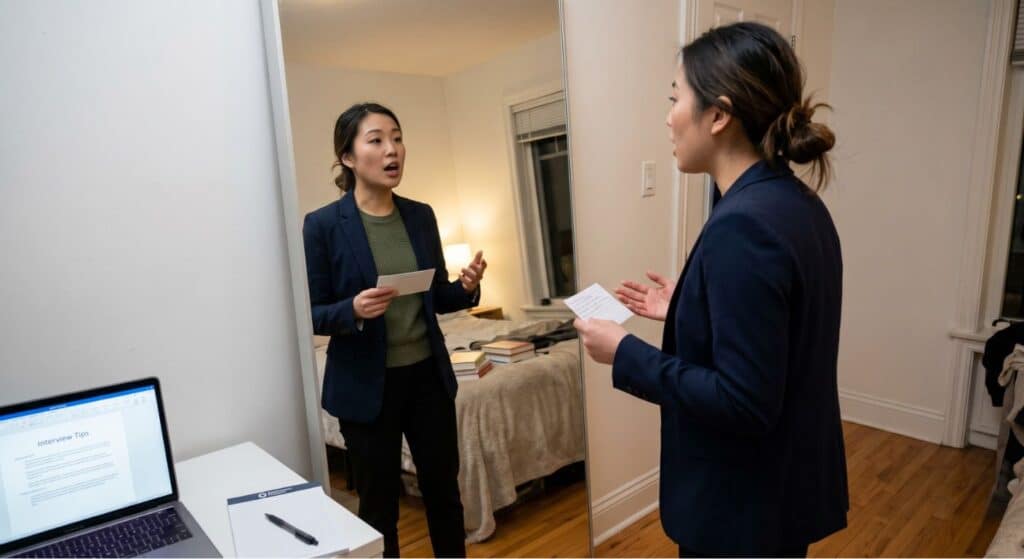
How To Answer Your employment interview Questions
Answer briefly, but attempt to avoid yes/no answers. Don’t worry about pausing before you answer — it shows you’ll think before answering.Don’t worry about admitting that you simply don’t know something, but don’t say it too often.
Be prepared for hypothetical interview questions — take some time, and think before you speak. Be prepared for unexpected interview questions. Keep the conversation moving. Speak up when answering employment interview questions.
Common Interview Questions

Tell me about yourself
Keep your answer to at least one or two minutes. Don’t ramble. Use your resume summary as a start line.
What does one realize about our company?
Do your homework before the interview. Spend a while researching the corporate and steel oneself against interview questions on this subject. determine the maximum amount as you’ll — products, size, revenue, reputation, image, people, skills, history, and philosophy (vision and mission). Be ready to demonstrate an informed interest. Let the interviewer tell you about the corporation also. Ask questions about the corporation.
Why does one want to figure for us?
Don’t mention what you would like, first mention their needs. you’d wish to be a part of a selected company project; you’d wish to solve a corporation problem; you’d make a particular contribution to specific company goals.
What could you be doing for us? What are you able to do for us that somebody else can’t do?
Refer to past experiences that show you’ve had success in solving previous employer problems which will be almost like those of the potential employer.
What does one find most engaging / least attractive about the work offered?
List three or more attractive factors and just one minor unattractive factor.
Why should we hire you?
Because of your knowledge, experience, abilities, and skills.
What does one search for during a job?
An opportunity to use your skills, to perform, and be recognised.
Please give me your definition of a {the position that you’re being interviewed}.
Keep it brief. provides a definition associated with actions and results.
How long wouldn’t it take you to form a meaningful contribution to our company?
Not long in the least, you expect only a quick period of adjustment.
How long would you stick with us?
Focus on showing your employer you’re in Canada for the future. Tell them you plan to remain and build your career here.
Personality-Based employment interview Questions
Does one generally speak to people before they speak to you?
Depends on the circumstances.
What was the last book you read? Movie you saw? Sporting event you attended?
Talk about books, sports, or films to point out that you simply have balance in your life. Interview questions like this provide a glimpse into your personality, so attempt to be positive.
What’s the toughest part of employment for you?
Be honest. Remember, not everyone can do everything.
Are you creative?
Yes, give examples.
How would you describe your own personality?
No matter which words you employ, attempt to encounter balance.
Are you a leader?
Yes, and provides examples.
What are your future goals?
Avoid “I would really like the work you advertised”. Instead, give long-term goals.
What are your strong points?
Give a minimum of three and relate them to the corporate and job you’re interviewing for.
Career Goals — Employment Interview Questions
If you’ll start your career again, what would you do differently?
Don’t give the impression of being regretful.
What career options does one have at the moment?
Relate these to the position and industry.
How would you describe the essence of success? consistent with your definition of success, how successful have you ever been so far?
Think carefully about your answer to those interview questions and relate it to your career accomplishments.
Your Work Habits And Elegance
If I spoke to your previous manager, what would he or she say are your greatest strengths and weaknesses?
Emphasize skills — don’t be overly negative about your weaknesses. it’s always safer to spot a scarcity of a skill as a neighborhood of improvement instead of a shortcoming.
Are you able to work under pressures, deadlines, etc.?
Yes, it’s how life is in business.
How have you ever changed the character of your job?
Improved it, of course.
In your present position, what problems have you ever identified that had previously been overlooked?
Keep it brief, don’t boast.
Don’t you feel you would possibly be more happy during a different size company? Different sort of company?
Depends on the work. Elaborate slightly.
How does one resolve conflict on a project team?
First you discuss the problems privately.
What was the foremost difficult decision you ever had to make?
Try to relate your response to the potential employment situation.
In your current or last position, what are or were your five most vital achievements?
Refer to key achievements already identified on your resume.
The way to answer the ‘your biggest weakness’ interview question
The interviewer won’t be impressed with classics like “I’m a perfectionist,” or “I’m a workaholic.”You’re sitting face-to-face with the person you most want to impress — your prospective boss — and that they are asking you, “What is your greatest weakness?” This is often probably one of the foremost difficult and regularly asked employment interview questions, so it’s smart to be prepared with an honest answer.
Interviewers really don’t care what your weaknesses are. The interviewer simply wants to ascertain how you handle the question and what your answer may indicate about you. They also want to ascertain how well you’ve prepared for this question as you ought to realize it is coming.Be honest. Answer it honestly in a way that makes you look positive. Mention a real weakness, but not one which will disqualify you within the interview.
“My area for improvement is…”
Highlight a skill that you simply wish to enhance upon and, more importantly, describe what you’re proactively doing to reinforce your skills during this area. Having the ability to mention you’re actively trying to vary your weakness into a strength may be a good idea. For instance, “The area I might wish to improve on is speechmaking, and that I have just enrolled in during a toastmaster’s course.”
Highlighting a neighborhood for improvement demonstrates you’re self-aware. Describing what you’re doing that weakness demonstrates that you simply are proactive and seek to enhance your talents.
Behavioral employment interview questions
Be sure to possess examples handling conflict, stressful situations, achievements, initiative, teamwork and leadership. Some interviewers choose to not ask the “weakness” question directly but to couch it in terms of a past experience.
Behavioral employment interview questions that prolong deficiencies are: “Tell about the most important mistake you made in your career and what you learned from it”, or “Give an example of once you disagreed together with your boss or co-worker and the way you handled it.”
Choose your weakness before the interview. Limit your answer to at least one weakness and say what you probably did so as to beat it. Overcoming a weakness is really developing a strength.Being able to debate your weaknesses also indicates a capability to handle constructive criticism without becoming defensive. It shows a willingness to grow personally.
How To Prepare For A Successful Immigration Interview
It is always better to be safe than sorry. it’s better to understand what you would like to cook before you purchase grocery supplies. it’s better to understand what you would like to observe before opening Netflix. Most of all, it’s better to organize for your immigration interview than to travel in blind.
An IRCC officer might require you to attend an interview if you’re seeking permanent residence (PR) in Canada. This interview is usually the ultimate stage within the PR application process, allowing IRCC to assess your eligibility.
Here’s a guide on why these interviews are conducted, what you’ll expect, and best practices to organize for a successful immigration interview.This guide offers essential tips to spice up your confidence and approval chances. From reviewing your application to demonstrating good intentions, each step is significant. Let’s dive in and ensure you’re ready for a successful immigration interview.
Here Are Our Important Tips For A Successful Immigration Interview:
Although preparing for an immigration interview can seem overwhelming, you’ll approach the method confidently if you propose ahead and prepare well. the great recommended practices listed below will assist you in preparing for a fruitful immigration interview:
Arrive On Time
The simplest point, and yet maybe the foremost important! Immigration officers expect you to get on time for your immigration interview. If you’re late, the officer may deny your application. Be prepared to encounter long lines at the doorway of the immigration building, and thus it’s advisable to reach at least 15-30 minutes before your scheduled time. You do not want to be late to your immigration interview.
Also it’s important to understand that you simply won’t be allowed to bring certain items into the immigration building, such as: matches, lighters, any liquids (including perfume), sharp objects, and aerosol.
If a guard stops you because you’re in possession of any of those items, you’ll usually tend to either throw the item away or take it back to your car, which can cause you to be late for your interview, because you’ll be sent to the rear of the road. remember that some immigration field offices don’t permit cell phones.
Dress Appropriately
The first impression always makes a difference. Immigration officers concentrate on how you dress and the way you act. The immigration interview may be a part of a proper legal process, and dressing appropriately will inform everyone involved that you simply take that process very seriously.
Think of the immigration interview like it’s an employment interview. attempt to impress the immigration officer. Having an honest attitude is simply as important as dressing well. Avoid being overly excited or irritated. Be assertive but kind. Try to not anger the officer conducting the interview.It may increase your chances for fulfillment .
Examine Your Application Carefully
Examining their applications and pertinent documentation in preparation is crucial for interviews, even as immigration authorities at IRCC do an equivalent for applicants. Because interviewers frequently specialize in missing or incomplete material in applications, applicants should steel oneself against questions on these aspects of their file.
New applicants may additionally consider providing additional supporting documentation if they didn’t include it in their initial application. However, they ought to be prepared to defend their initial decision to withhold this information.
Before your interview, carefully review your form multiple times. This step is particularly important if you’ve received professional assistance in filling out the shape. make sure you know all the small print, like your accommodation plans and travel itinerary.
Speak Clearly
Interviewees need to strive for lucid and succinct communication. to make sure that others clearly understand their comments, they ought to speak at an inexpensive pace and avoid using jargon or technical phrases, choosing simple English instead.
In order to ensure appropriate accommodations, interviewees should notify the police beforehand or during the interview if they need special needs or require assistance. you ought to express any must ensure a positive interview experience because immigration officials are trained to be accommodating.
Interviewees should behave during a cool, collected manner the whole time. Maintaining a confident and laid-back demeanor might enhance the officer’s perception and project competence and professionalism.
Tell The Reality
It is imperative that interviewers confirm their answers correspond with the info they included in their application which they’re entirely truthful during the interview. Officers of the IRCC keep an eye fixed out for any indications of fraud or exaggeration. Honest and dependable responses show integrity and dependability.
Crucially, misrepresentation—providing the IRCC with false information—can end in severe repercussions, like a minimum 5-year restriction on entering Canada, possible prosecution, and loss of status as a permanent resident. Newcomers maximize their chances of success once they honestly disclose all pertinent information.
Even if misrepresentation in their application is thanks to an honest error, authorities should hold prospective applicants legally responsible. This emphasizes how crucial it’s to thoroughly check and appropriately present all of the fabric in their immigration application. Being honest is usually the simplest approach in your immigration interview.
Address Any Concerns with Composure
Interviewees should respond diplomatically and constructively to the interviewer’s concerns or challenging questions. When responding, they need to attempt to be courteous and helpful, providing clarifications or explanations as required, instead of becoming defensive.
It is important for newcomers to understand that the result of their interview depends on their ability to influence the immigration officer so that they really meet all eligibility requirements. As such, it’s best to reply to any issues mentioned during a cool, collected manner so as to make a positive interview environment.
Inquire and Pursue Further If Required
It’s critical that interviewees feel comfortable enough to ask questions during the method if they need any doubts about the procedure or subsequent steps. Interviewees should be happy to ask questions or voice concerns during the interview because IRCC staff are trained to deal with any questions or issues that newcomers may have.
Similarly, newbies should follow up as required by taking the right actions following the interview. this might be giving more details or supporting documentation upon request or simply holding off until the interviewing authority gets back to you.
Bring A Group Of Original Documents And A Replica Set Of Copies
Being prepared means bringing the acceptable documents you would like with you to your interview. Bring a group of originals (or certified copies of the first documents) to your immigration interview. Also bring a photocopy of every one of those documents.
The immigration officer will examine the first and can invite a replica to stay in his file.Having everything you would like with you shows the Officer you’re responsible and proactive in saving them time.
Take Your Interview Seriously
Put it on your calendar and plan for the interview. confirm you’re taking a day off from work, so you don’t need to reschedule the interview. Only reschedule just in case of an emergency.
Practice Your Interview
When you are asked an issue during your immigration interview, give straightforward and concise answers. The longer and broad your answer, the more likely it’ll cause more questions.
Answer the question being asked, it’s very irritating when someone answers an issue that wasn’t asked. for instance if you’re asked “when did you get married?” just give a particular date, don’t the “where” and “why” of your marriage unless asked directly.
The only time you ought to expand on your answer is when an immediate answer will give the incorrect impression. Practice taking note of the question completely and attentively, don’t begin to answer until the interviewer finishes asking the question.
Conclusion
An immigration interview is simply another step within the immigration process, but properly preparing for it ensures you’ll have the foremost successful experience possible. By following the following pointers and thoroughly preparing for your immigration interview, you’ll increase your chances of success and navigate the method confidently.